I didn’t just fall.
My body remembered.

When I hit the ground, I curled instinctively to the same side, folding into a fetal position so familiar it felt rehearsed. In that shape—small, bracing, protective—I suddenly recognized something I hadn’t named in the moment: this wasn’t only an accident. It was a reenactment.
It was my nervous system doing what it learned to do a long time ago.
The Original Template: “Danger, No Protection”
As a child, I had an experience that became a template in my body.
My father attacked me one day when he was upset. My mother didn’t protect me.
That combination—threat paired with no rescue—does something profound to a developing system. It doesn’t just create a memory you can recall. It can create a pattern your body repeats when it senses anything even remotely similar:
Someone has power over you The environment feels unpredictable Your “no” doesn’t land You have to manage someone else’s intensity You don’t feel fully protected, fully seen, or fully safe
And here’s the hard part: adulthood doesn’t erase these patterns. It often refines them.
The Barn as a Re-Creation of the Dynamic
I loved the horses. I loved the beauty, the awe, the intimacy of learning. But the barn carried an energy I couldn’t ignore—stress, volatility, the sense that anything could shift quickly.
In my body, it started to feel like the old landscape:
a powerful force (the horse, the environment, the “way things are”) a sense of needing to adapt, appease, endure an underlying question: Will I be protected here if something goes wrong?
Even when no one is “doing” anything intentionally, dynamics can still echo. And the body—especially a body that has stored trauma—doesn’t need a perfect match. It needs a rhyme.
When Trauma Isn’t Remembered, It’s Repeated
One of the most misunderstood things about trauma is this:
If it isn’t fully processed, it doesn’t disappear. It stays organized in the body.
Not as a story you can tell, but as:
bracing in the muscles tension in the jaw, throat, belly vigilance in the eyes collapse in the chest numbness in the limbs a reflex to fold, freeze, or fawn
In other words: the trauma becomes a posture, a strategy, a way of moving through life.
So when I fell off the horse and landed in that exact fetal curl—the same side, the same shape—something important happened.
It was as if my body said:
“Here. This is where it got stuck.”
The Fall as a Dislodging
I didn’t process it in the moment. I was focused on the physical impact, the logistics, the shock.
But afterward, something began to stir—emotionally, somatically, energetically. Almost like the fall shook loose what had been packed away, sealed off, stored in muscle and bone.
Sometimes an event doesn’t “create” trauma. Sometimes it touches an old one and brings it up for completion.
Not because life is cruel—though it can feel that way—but because the psyche and the body are always moving toward wholeness. When we’re ready, what was frozen looks for a way to thaw.
The Ancestral Thread: Horses, Survival, and the Body’s Long Memory
And then there’s another layer—one I’ve come to respect deeply.
For many of us, our nervous system isn’t only shaped by what happened in our personal childhood. It can also be shaped by what our ancestors endured and passed down through the body’s inheritance: patterns of survival, vigilance, readiness for threat.
For my people, the horse is not simply an animal. It carries history. I can feel an ancient storyline in my body—images and sensations of being on horseback, being attacked, fighting for life. I’m talking centuries back, the kind of survival that marks a lineage.
Whether we understand this spiritually, psychologically, epigenetically, or somatically, the lived reality can be the same:
The body holds history.
And sometimes, when we touch a symbol that’s big enough—like the horse—we touch the whole archive.
This Is Exactly How Present Problems Get Made
This is also why I do the work I do.
Because what looks like a “present-day problem” is often a present-day portal.
A conflict at work.
A relationship dynamic.
A panic response that “makes no sense.”
A chronic tension pattern.
A repeated attraction to unsafe situations.
A deep shame that arrives out of nowhere.
So often, these are not random failures. They are re-creations—attempts by the nervous system to return to the scene with one unconscious hope:
“Maybe this time it will resolve.
Maybe this time I will be protected.
Maybe this time I will get to complete what never completed.”
But resolution doesn’t come from repeating the scene externally.
It comes from completing the emotional sequence internally.
The Missing Piece: Moment-by-Moment Completion
Trauma isn’t just about what happened. It’s about what didn’t get to happen.
Maybe the body needed to:
push away run yell shake cry rage be held be protected feel the truth and have it witnessed
When those impulses are cut off—because it wasn’t safe, or you were too young, or you had to survive—the body “stores” them.
That’s why working through trauma isn’t just insight. It’s not only understanding.
It’s step-by-step, moment-by-moment re-processing—at a pace the nervous system can tolerate—so the body can finally do what it couldn’t do then.
This is the heart of somatic work: the body completes the loop.
A Gentle Way to Begin: Recreating the Moment Without Re-Traumatizing
If you’re reading this and recognizing yourself, here’s the most important guideline:
We don’t force the body through trauma. We invite the body to unwind it—slowly.
A simple entry point (that you can do gently, and ideally with a skilled practitioner if the trauma feels intense):
Orient to safety first. Look around the room. Name 5 neutral objects. Feel your feet. Let your eyes soften. Find the smallest piece of the memory. Not the whole event—just a single snapshot: a posture, a sensation, a moment right before impact. Track sensation, not story. Where do you feel it? Jaw? ribs? hips? throat? Let it be specific. Let one emotion be true. Not the whole flood. One honest thread: fear, sadness, anger, disgust, grief. Let the body respond in micro-movements. A tiny push with the hands. A slow turn of the head. A tightening then release. A tremble. A breath that changes on its own. Pause and come back to the room. The body learns completion through titration—little sips, not drowning.
This is how trauma leaves the body: not through willpower, but through completion.
The Deeper Meaning of “Falling”
I don’t romanticize injury. I’m not “glad” I fell.
But I can honor what it revealed.
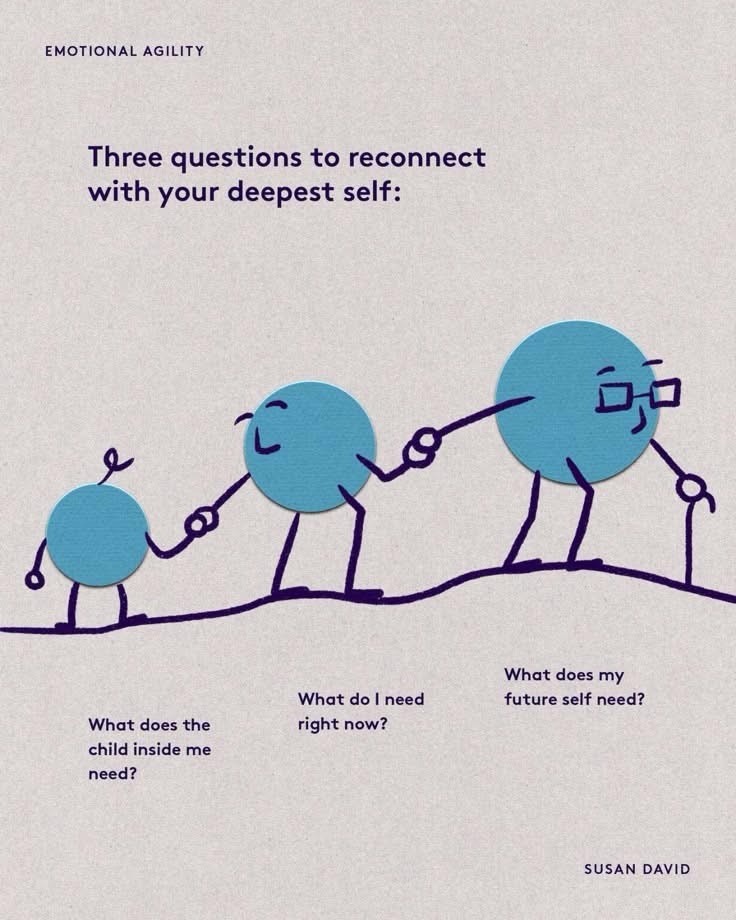
My body showed me an old shape it had been holding for decades. It showed me a pattern of helplessness paired with lack of protection. It showed me that part of me was still curled on the ground, waiting for safety to arrive.
And maybe—just maybe—this time it can.
Because now I’m here.
Now I’m listening.
Now I know what’s happening.
Now I can protect the part that wasn’t protected.
Now I can let the body finish what it couldn’t finish.
And that is not a setback.
That is a turning point






 This Emotional Life