I Feel Therefore I Am

Every human being suffers from one inescapable conflict: the struggle between the feeling body and the thinking brain. Once we resolve this conflict we can resolve everything. Over the course of a lifetime, we are destined to experience some suffering. There are hundreds of therapies designed to help us, but in order for any therapy to be effective it must do one thing above all else. It must end the discord between our feeling bodies and our thinking minds.

In our formative years, the way our mind/body relationship gets formed, determines the quality of the most important relationship we will ever have, the relationship to our self. As children, each time our emotions were not validated, our minds were forced to draw conclusions from information other than what our bodies felt. The result was an unresolved, constant conflict between what our logical minds told us and what our bodies actually felt. As we move through our lives, the quality of the relationship we are having to ourselves, affects our mental and physical health, our relationships with others, our place in our community, and our experience of the world at large.

Resolution Therapy” explains how and why our minds and bodies end up at odds with one another. It examines the crucial part our emotions play in resolving life’s conflicts. Our emotions are not a luxury, they are the means through which our minds and our bodies remain in harmony and in health. Any situation in which we are are unable to access our emotions creates an internal conflict that keep us from understanding ourselves and our lives.

Resolution Therapy” is a  self-healing technique that creates peace in our lives by restoring harmony between our minds and our bodies. It does this by teaching us how to feel pure emotion. Once we feel and understand the role that our emotions play in our mental and physical health, we will not only feel better, we will regain access to the very tools that nature gave us to cope with all of life’s struggles.

Ease Their Pain

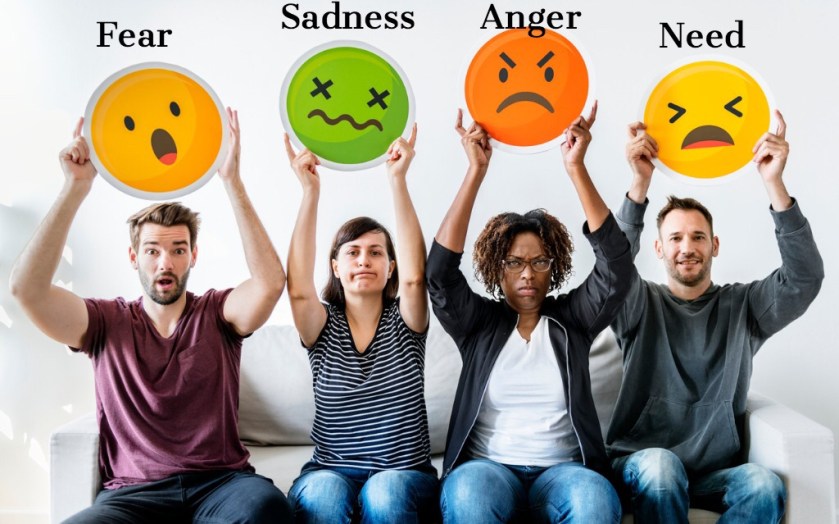
Love is an emotion that creates connection, and as far as our babies and children are concerned, all they long for emotionally and physically, is that loving connection to us. It’s important to realize that the emotions, we as adults would prefer not to feel; anger, fear, sadness and need, are the only tools they have for letting us know when that connection is at risk.

The Cost Of Denial

img_4258-3

When I found a way to give the child I once was, all that I longed for from my parents. When I found a way to feel the sadness and the anger, and admit and feel the fear of potentially not ever having what I needed. As I continued to fully embrace the truth about both the small, and the devastating pains of my past. Each time I embraced the truth, I no longer needed to lie to my body, or pacify it with compulsions, or addictions, or the clinging to authority figures, or any intellectualizations. All of my embracing of my truth, continues to give me the energy, once used for denial and defense, to better love myself, to be better at allowing myself to be loved by those who are capable of loving me, to continue learning what it means to have true compassion for myself, so that I can be better at loving others. Denial comes at much too great a cost. I continue to become more free, every time I embrace the truth, feel the uncomfortable truthful emotions, and allow myself to imagine a better senario. By walking through the discomfort that I feared feeling, I can make space for a new reality. I can erase the old recorded messages, and the subconscious’ need for the repetition of the same painful experiences, only by truly feeling the pain and anger of having been subject to them in the first place. For it is necessary to not only admit the old reality, but to finally have the courage to fully feel the fear, anger, pain and need of that old reality, so that we can erase it’s hold on us by creating and recording, a new, more loving reality for ourselves. To feel the truth and replace it with the experiences of the love we deserved, is the only way to break the cycle. Denial keeps the pain alive.

Emotion-ology

Above are the four emotions we would all rather not feel. Unfortunately for us these emotions are necessary to our species. They help us to survive and evolve. All of these less than pleasant emotions, have an interconnectivity to them. Once we are experiencing one of them, they lead us into the others in a beautiful sequencing designed to keep us physically safe and psychologically sound.

One example that depicts the beautiful sequencing of our emotions goes as follows: When we walk into a party, where we don’t know anyone, the first thing we are doing is using our nervous system to determine whether we feel afraid (fear) or excited about the encounter. If we sense aggression, our system then must decide whether or not we need to exert our boundaries and to what degree (anger). Trapped in this unpleasant situation we feel disappointed (sad) and upon leaving the situation, the missed opportunity for making connection to another human leaves us with a feeling of emptiness (need).

If we want to live our most healthy and fulfilling life, we must become aware of the places in our life where we don’t have access to these primitive, raw yet essential emotions. We must restore accessibility to all of our survival emotions so that we can be safe enough to grow fully into ourselves.

Our emotions keep us aware and they increase our chances of attaining a higher consciousness. Our emotions make us fully human. We must graduate from the school of being a fully feeling human, so that we can continue evolving and becoming more aware of our spiritual essence.

Our Emotional Nature

Dr. Frank Wilczek, the physicist and MIT professor, has written about the beauty of science as it relates to life. He reminds us that what we presently refer to as ‘science’, was at first called ‘natural philosophy’. There is a system to how our emotions function that is an example of natural philosophy at its best! Physics is a natural science that concerns itself with energy. Everything in the universe is comprised of energy, including us, and our emotions are an instrumental part of the energy that keeps our bodies functioning. The definition of energy in applied physics is, “that which does work”. Our emotions are energies that do work in our bodies, they keep our mental and physiological systems running well. It is a fact that a good cry triggers a chemical reaction within the body that is associated with stress reduction and that less stress means a stronger immune system. There are more obvious correlations, such as the emotion of love in the form of touch and care that keeps babies alive and growing. It’s been proven that food and shelter alone is not what keep babies alive but the emotion of love demonstrated in the way we care for them. It is the emotion  of love that enables babies to develop into healthy, resilient children.

We now have scientific research in the field of neuroscience that validates the effectiveness of therapies that help us to feel our emotions. We now know that what we feel in our bodies greatly affects our minds.

In the following pages, I will explain how our emotions work to heal us by putting our bodies and mind at peace. I will provide clear examples from my life and my work, that give evidence to my belief; that all of our problems come from conflicts that exist between the mind and the body. Nothing that happens in life can destroy us. It is not being able to feel what happened to us, that threatens to destroy our mental and physical health. Conflicts between what the body feels and what the mind thinks, negatively affect our health and our relationships. By denying our emotions, we stay stuck in conflict and false, inner dialogues that prevent us from knowing ourselves and living out our true destiny. Our emotions are the only means we have for knowing our truth. As long as our emotions are not operating freely, we are remaining separate from our truth, and separate from our own true selves. Until our mind/body are in harmony, we will find ourselves in conflicts that need to be resolved. Our internal conflicts will continue to create problems not only in our bodies and our minds, but also in our relationships, our communities and our world. Over the years, I have often thought of the biblical quote, “..and you shall know the truth and the truth shall make you free”.  Nature intended us to keep feeling and processing our emotions so that we could know our truth and live and love better. We need to understand the meaning and purpose of our emotions, so that we can become less afraid of experiencing them. Living in our truth, ends all need for conflict. With a full awareness of our truth, our journey through life becomes unhindered by past unresolved problems. We become more at peace and one with nature. The worlds of science, health and spirituality are merging more and more. There are so many paths, but there is only one truth. Absence of truth will always interfere with science and nature. The truth aligns and harmonizes everything and everyone, and puts us in sync with the universe.

Good therapy should make it possible to understand why things go wrong in our lives and give us tools to set things right. Our emotions coupled with our imaginations are all the tools we will ever need. Nature gave us a way to not only survive, but to resolve everything, so that we might thrive and evolve individually and as a species.

Why is love so complicated?

Why is love so complicated?

And can explaining why, be done in an uncomplicated way?

I’m going to try. We all need love. We all want love. We all want to have some, one person, or perhaps it’s a pet, to love and to love us. But even if we succeed at finding someone to love, we can still find ourselves struggling with that relationship, or if not that one, then our relationships with the other people in our world or within the world in general. And when we expand the circle out into the country or the world, we become even more fractured in our ability to love and be loved; country, party, race, religion. So why does it have to be so difficult to all love one another? Yes. That’s where all the above facts about love get blown to bits! We all know love is good, but we all either experience the struggle first hand, or see the struggle in our communities or in the worlds of politics and religion.

So perhaps it’s all based on how much we really love ourselves. You know, that old bible quote, “love others as you love yourself”? Was that really meant as advice or a warning? Perhaps the true intention of that famous quote is that we can only love another as much as we love ourselves.

Could the answer to why love is so complicated be in how we compartmentalize love? For example, why should the love we have for our child, be any different from how we love our spouse or our partner, or any other child for that matter? Why do we afford the child a patience and understanding that can completely evade us when we are dealing with let’s say our husband or Donald Trump? The answer is because we expect more from them. We justify it by telling ourselves, “they should know better”, but apparently they don’t. If they did, wouldn’t they do better? And for that matter, if our children don’t behave well, why should we assume, that they should know better? If they knew better, why would they choose not to do better? It makes no sense. If a child is choosing to misbehave, if it’s really a conscious choice, then something is promoting that choice and that’s the thing that needs to be addressed. Addressed with a desire to understand where they went wrong and made a poor or dangerous choice. We need to search to understand, because understanding is love, and we can’t provide that loving understanding, unless we ourselves know it.

So here’s why love gets so complicated.

Love is connection, and as far as our babies and children are concerned, all they ever long for, emotionally and physically, is to have a loving connection to us. All the unpleasant emotions they may express; fear, anger, sadness, those emotions are all they have to let us know that their connection to us feels threatened. It’s important to recognize that all of those other emotions that we would rather avoid; anger, fear, sadness, need. All those other emotions, when suppressed and unprocessed, are what cause us to behave badly, those emotions are the only tools we have for letting others know when love and connection are at risk, without them we become erratic or frozen in distress. Adults doing badly, are merely babes and children, struggling to use their emotional tools, people who are desperate to restore the hope of ever being understood and ever finding connection. Underneath all the recent political, fear mongering, and all the frustration about the far right or the far left, underneath all this, are just a bunch of children looking to be understood and loved. For all of you Mel Brooks fans, think of the scene in the movie Young Frankenstein, when the monster (Peter Boyle) is raging out of control and Dr. Frankenstein (Gene Wilder) goes to him and asks him to explain what’s really wrong, how he feels unloved and alienated. And what happens? The monster ends up weeping in sadness until Frankenstein hugs and rocks him back to feeling love and connection. That moment in the movie, like most great comedy, is wrought with some bitter truth. Without understanding and connection we rage and struggle. The less understanding and connection, the more upset we become, and then the more potential there is for us to cause emotional or physical harm to ourselves or others.

So that’s why love is so darn complicated. It’s because the answer to what goes wrong on a personal or global level, lies in our very beginnings, a place that for the most part, the world is refusing to look towards for the answers. It’s clear to me that in order to make love less complicated, we need to look back to all the places in our past where love and connection were threatened. We need to make right any place where we tried to express our fear and our anger, because no one could understand that what we were actually looking for, was love.

The good news is, if we can restore our ability to understand each other, if we can keep using our emotional tools, then we can ultimately get the love we all need, and then little by little, we can restore love back to its original, profound simplicity.

We all just want to be loved.

Reactions/Responses

Reactions are defensive feelings born out of a denial of our vulnerable self; they promote isolation and hinder community. We are all incredibly fragile; that will never change. When we are stuck in our defenses, trapped in our mind’s feelings, we are denying the vulnerability we were forced to deny somewhere in our past. Denial of our fragileness only serves to harden us and make the world a less safe place

Reactions are always indications of existing internal conflicts. When we find ourselves obsessing in our heads about some occurrence in our day, what is really happening is that our body and our mind are in the throes of an old debate, and neither wants to yield to the other. Our body is longing to feel pure emotion. The real source of our mind’s distress is never simply stemming from the current event, it is always coming from the past. If the conflict had been dealt with well, there would be no anxiety or distress inside our minds. Our brains would not obsess if we were in the present. If our emotions were operational, we would feel completely in control. Anxiousness, and the inability to think clearly are always an indication of an old, inner conflict trying its best to find resolution. You can look at it this way. The worse the reaction, the more traumatic the past situation. Because we were unable to reconcile the fear and anger in the past, we are thrown back by the present moment’s incitement of our past distress.

One example of a reactive, false narrative, one that we can all identify with, is the common expletive, “I’m over it!”. Who among us, hasn’t claimed that we were over something or someone, because our logical mind so desperately wanted it to be so. We tell ourselves we can use our minds to will ourselves into some preferable state of being. It never works. The thought of “I should be over this person or event” creates the feeling of contempt. The conflict is still alive. The real emotion is sadness, and the inability to process it, is coming from an important, past event in which sadness was neither fully felt nor processed. Past reactions are recorded within our nervous system and become accepted ways of dealing with pain and hurt. Yes, time helps us to bury the conflictual feelings, but the need for resolution will remain within us, and both the body and the mind will suffer. Mention the event a few years later, and there will be a twinge or a pang in the body, reminding us that we never really processed and resolved that situation. False beliefs or statements always cause a tense reaction in our bodies

When we are responding to a situation, we are experiencing emotion, when we are not, we are in our defensive feelings. We are experiencing emotions most of the time, but when we aren’t, it’s a problem. When our encounters with others send us into a state of confusion and upset, we are in a past moment in which we were also in distress. When this occurs we are no longer in an emotional state, we are in a panic, a kind of shock. We have all had experiences where we couldn’t articulate what we were feeling and it feels awful. We walk away with our minds racing and we continue to be tormented about what happened, what we said or didn’t say. Faced with any encounter, we will either be in a position to respond or react. When our bodies are able to stay calm, we usually find ourselves perfectly able to respond to the situation, coming through it with our peace in tact. However, when we have been rattled we can find ourselves, reacting either with hostility and aggression, or shutting down completely. When we are left with no other recourse than to react, it is because the situation we found ourselves in, triggered an unresolved moment from the past. A past occurrence in which we also were not able to access and process our emotions. One of the reasons that the emotion anger, an emotion so necessary to the maintenance of our self-esteem is given such negative press, is because reactive, aggressive behaviors that we witness either on the street or on the movie screen, or in our own households, are labeled “anger” when in fact they are not anger at all but destructive, aggressive reactions. As Damasio and Dr. Van Der Kolk’s work reveal, we get triggered when we can’t access our emotions and we become either aggressive or despondent. The mind/body conflict gets triggered. Dr. Van Der Kolk refers to this state as being ,“emotionally hijacked”. When our brain shuts down in this way that causes us to lose control over what we say or do.

So what can we do in these situations? Well, first of all we can begin to become aware of the times in our life where we are actually in a reactive state. Once we are aware that we are unable to be calm and respond well, we may be able to walk away from the situation so as not to cause any verbal or physical harm to anyone. If we are finding ourselves turning inward and folding under the pressure, we can try to remove ourselves from the situation or be aware that we are no longer present in the moment. What we need to do once we can identify these places in our day, is to later walk back through them in our minds and allow ourselves to be fully present, in this way we can start to resolve the past. We look to our bodies for clues to uncover what it knows. Where in the past did I feel similarly to this moment? When we have the freedom to recreate the moment without the pressure of another person to deal with, we can discover where in our bodies we are reacting to the situation. Often we will have tension in our throat, or chest, or our shoulders will start to ache. Whatever reaction the body has, is a clue to its memory. Sometimes the focus on the body is enough to bring the memory to our conscious mind. If nothing comes up we can begin to ask questions. One way I have affective to tap into the body’s knowledge, is to give that particular part of the body a voice. If my chest could speak out in this moment what would it say? Or how old is this place in my body? Once we locate the place from the past, the next step is to stay there and walk ourselves through it, only this time with the presence to feel our emotions fully. We can then find a way to deal with the people from the past, work through our fear and anger, receive comfort and connection, reconcile the moment and resolve the inner conflict. Reconciliation of the past always allows us to replace shame and guilt with self-compassion, we get to reinstate our worthiness. Our imaginations play a vital role in healing. Our imaginations make it possible for us to experience and relive the old events in our minds. When our mind creates a scenario, our bodies respond as though it were actually happening making it possible to go back in time and process our emotions. Nature intended us to use the brain’s ability to imagine so that we could help ourselves feel better. It seems nature knew that we needed something to enable us to experience the healing emotions of comfort and love in our own minds so that we could experience those emotions even if our caregivers let us down. I have taught my students how to employ the gift of their imaginations to alleviate all of their mind/body conflicts.

Holding Back The Tears

Who among us hasn’t had that moment? You know, the one where you fight back the tears? Or how about the one where your heart is pounding and you feel furious, but you push it down because you fear what you might say or do? It’s important that we have the ability to regain control of ourselves in moments like these, but I’ve often thought about what these moments might be trying to tell me? For me, these moments have provided some important information. It’s true, there are times in which it would be completely inappropriate to just let our feelings flow, but why at certain times do we find ourselves consumed by such strong emotion? So consumed that our rational, decision making brain is forced to take a back seat. In these moments, the emotions that we feel in our bodies, are trying their best to override our thinking brains. It seems to me that our bodies are wanting us to know some truth, perhaps a truth that is buried deep within us.

As human beings, we are all familiar with uncomfortable emotions. In fact, according to trauma specialists, like Dr. Bessel Van Der Kolk, author of the book, “The Body Keeps The Score”, our brains do their best to protect our bodies from feeling uncomfortable emotions. Although the intentions of our brains are all good, this protective mechanism causes a conflict between the feeling body and the rational mind; it creates a mind/body conflict. And here’s the catch-22! The only way of resolving this mind/body conflict, is to allow our bodies to experience the very emotions that our brains are trying to avoid. According to neuroscientists like Antonio Damasio, author of the book, “Self Comes To Mind”, our emotions are the body’s way of understanding our experiences. Our emotions supply our brain with the truth about our life, which means, feeling our emotions is vital to our peace of mind.

So I’ve asked myself, what if I didn’t just move on from these moments where I fought back my tears or my anger? What if I were to examine my reaction later, in private, in the safety of my own mind? I needed to ask myself some questions, like what was going on for me in that moment? Why did I find it necessary to squelch my emotions? Well, what I’ve discovered over the years, is that the reason the emotions in these moments are too intense, is because they are reminding my body of an unresolved time from my past; a time when my mind was forced to bury the very same uncomfortable emotions that my body was feeling in the present situation. I’ve discovered that whenever I am unable to calmly and clearly express my sadness or my anger, it’s because the present situation has triggered a messy, unresolved moment from my past. I have been able to learn so much about the truth of my history and I have been able to resolve and heal so much from taking the time to emotionally explore these situations.

In using the present to heal the past, I have discovered some commonalities. I have found that in the conflictual present there is always a sense of confusion. My logical mind always seems to be struggling to gain control of the situation, but failing to do so, because at the same time my body is experiencing the moment as a crisis. I also have discovered that the emotion I was having in the present, was always way more intense than the situation warranted because it was being exacerbated by the pain and anger of the past. I have also found that the degree of emotional intensity in the present conflict, was always based on how hurtful the past moment was, and how many years it had remained dormant within my body. When our logical brains are forced to deny our emotional truth, it doesn’t go away, our bodies will store the information, waiting for opportunities to resolve the past. It appears that nature’s law of attraction is at work, leading us into certain emotionally charged circumstances in order to supply us with the opportunity to reconcile and relieve our bodies of the conflict.

We are all destined to find ourselves in emotionally uncomfortable situations with others, and we can heal and grow from these moments. Through these uncomfortable moments, I have been able to reconcile many past events. I have learned that each time I reconcile a past moment, I am better able to handle my emotions in general. Each unwelcome opportunity, brings me closer to resolving my mind/body conflict and I actually feel more and more peaceful in myself. There are hundreds of therapies designed to help us resolve the conflicts in our lives, but my personal and professional experiences have led me to one conclusion: In order for any therapy to help us find more peace in our lives, it must do one thing above all else; it must end the conflict between our bodies and our minds, and the only way to end that conflict, is by allowing the body to feel its truth. The truth of human experience can only be understood through the brain’s processing of pure emotion. These “fighting back the tears” moments are our bodies way of desperately trying to feel its truth.

Our emotions are not a luxury, they are our only means for maintaining harmony between our minds and our bodies,  keeping both peaceful and healthy. An important factor when it comes to healing, is knowing the difference between a feeling and an emotion; feelings keep us stuck, while emotions have the power to heal us by resolving our internal conflicts, making us better at forming real connection with others. We experience many feelings that are mistaken for emotions: guilt, shame, frustration, despair, hate, contempt. With emotions, there are only a few to choose from; the ones we need to deal with most often are: fear, anger and sadness. I have found that all of my irreconcilable conflicts are a result of my inability to access and process pure emotion.

In conclusion, in these moments of confusion and overwhelming emotion, I do my best to stay calm and rational, even when my heart is pounding and I feel the tears coming on. I do my best to keep conscious of my breathing and get through it, knowing that I can find my peace later. I try to stay aware of everything I’m feeling without reacting to any of it. Later on, I am able to deal with everything from a place of true understanding. This self-examination always leads to more compassion for myself, as well as anyone else who may have been involved. I know that these “fighting back the tears or anger” moments are my bodies way of asking me to listen to what it knows, personal stories, that my mind has yet to acknowledge. I continue in this way to resolve my internal conflicts and find more peace in my life. Gandhi gave us these wise words, “you must be the change you wish to see in the world”. He knew full well that the peacefulness in our world, will always only be a clear reflection of the peace we hold within ourselves.

Healing The Mind Through The Body

The goal of therapy is resolution. Facing the unresolved conflicts of the past is crucial to restoring peace between the mind and body. Somatic therapies allow us to return to the places in our past where internal conflicts were formed. We can reenact the past in our minds, coax the emotions into reemergence, and then most importantly, resolve the past by allowing the body to experience the proper response to our past dilemmas. Through the use of our imagination, our mind has the ability to relive and re-orchestrate the stressful moments in our history. What the mind imagines, the body feels, and by experiencing someone who could have validated the pain, and provided the caring, comfort and love that we all deserved, we can experience the emotional relief that simultaneously creates the physical relief. Unresolved traumas in our childhood, neurologically wire us and in doing so, determine the probability of future harmony or conflict. Without resolve, the remaining internal conflict, between what the body knows to be the truth, and what the mind told itself had happened, will continue to attract situations that mirror the conflictual emotions that were left disturbing the nervous system.

“I’m Not A Smart Man, But I Know What Love Is.”

This is my favorite line from the movie Forrest Gump. Love really doesn’t have anything to do with intelligence, at least not in the way we are conditioned to think of intelligence. Love is an experience. Love must be experienced to be known. We all, to a certain degree, have experienced love, without it, we would not be alive. However, the degree to which we can give the experience of love to another, is the degree to which we have received love for ourselves. Love cannot be intellectually learned, for that matter, none of the emotions that keep us mentally and physically healthy can be learned through our reasoning brain. Could this be the reason that such a simple and pure concept, as love, is SO very complicated and the source of SO much struggle? If it were as easy as teaching someone what love is, then we would likely all want a Phd in love and we would want it to be from a prestigious institution. Even the Dali Lama and the great sages couldn’t really impart upon their followers the ability to love. Their teachings may have been experienced by their followers as love, and therefore granted them the ability to know more love, but love can not be taught in the traditional way we teach a subject. Love is not something that can be taught and therefore is not something you can intellectually learn or even explain to anyone else in an effort to school them in love. One does not become capable of love through the act of reading about love. Love must be received in order to be known and it cannot be given if it hasn’t been both received and experienced.

In somatic therapy, we can go back and re-write the moments in our lives where love was not given and we can experience that love in spite of the limitations of our caregivers, friends and lovers. The body only needs to use the mind’s ability to imagine in order for us to experience, feel and know what love is. Please don’t confuse ‘pretending’ with the powerful somatic healing brought about by ‘imagining’. When we are pretending we are outside ourselves watching ourselves in a scene. When we are imagining, we are immersed in a way that our minds are one with the scene. We are only in the scene, not in the scene and observing it too. When we are imagining, our bodies are experiencing whatever we are imagining, as if it were real.

Once our bodies know love, we can have the courage to provide to others the 3 aspects of love: courage, strength and softness. It’s the only emotion that requires equal parts strength and softness, and the knowledge of when to use which one. Love has dimensions and layers, and the capacity for understanding goes far beyond the capabilities of our rational, knowing brain. Like all of our pure emotions, our rational brain has very little to do with it. Emotions are pure energy connected to the source of creation. When we connect to pure emotion, we are able to connect to our own self, to others, and to the source of life itself.