 For twelve years talk therapy was a nice place to go once a week to air my feelings and get some sympathy and advice, but it definitely did not heal me. My personal relationships were still unsatisfying and often conflictual, my self-confidence was low, and physically I struggled with pain and chronic illness. Yearning for understanding, healing became my life’s passion. I spent years studying everything from yoga, to the latest mind/body neuroscience, and I finally figured out something very important; something that really helped me; we cannot attain mental and physical health unless there is peace between our minds and bodies. Let me explain. When things go wrong in our lives, our tendency is to try and move on as quickly as possible. We will, more often than not, lie to ourselves, claiming “we’re over it”. So if we’re over it, why is it that our bodies still feel so bad? Why the sinking feeling in our stomachs, the tightness in our throats, the heaviness in our chests?
The truth is that we will never “get over it” by simply talking about how we “feel”. If we’re going to get over it, we must have peace between what our bodies feel and what our minds tell us, and this can only be achieved if we are willing to feel real emotions.
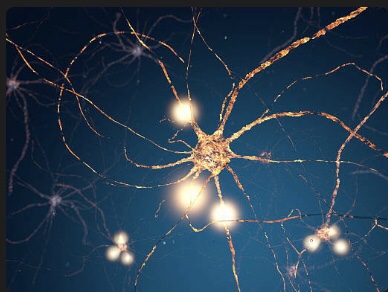
My quest for health and happiness became most productive, when I discovered that the real progress was happening when I actually felt an emotion and received empathy. According to Wikipedia, “empathy has many different definitions that encompass a broad range of emotional states”, however, for the purposes of healing the empathy that brings resolution is “the experiencing of emotions that match another person’s emotions”. For me, our emotions are what connects us. Our stories are different, but our emotions are universal. As I continue to heal and help others to do so, I have noticed that there is never any real relief in talking about how we “feel”. We must have the courage to actually feel our emotions and recent discoveries by neuroscientists are validating what we, somatic therapists, have known for years. Our emotions are not a superfluous part of our existence, they are a vital means, through which we are able to navigate all of life’s challenges. The problem is everything we feel is not an emotion. When we talk about how we feel we are using our logical minds to explain. The neurobiologist, Antonio Damasio, distinguishes a feeling from an emotion in his book “Self Comes To Mind”, when he notes, “…feelings of emotion are primarily perceptions of our body state during a state of emotion.” In other words, ‘feelings’ are perceived, whereas ‘emotions’ are experienced. Feelings are perceptions of what is happening in situations that have evoked emotion. If we are perceiving, we are drawing conclusions and deciding how we are. Damasio cites pertinent brain research, that proves the existence of a reactionary, time lapse, as we go from experiencing an emotion to having a feeling. The time frame, …”from the moment stimuli were processed, (the emotion) to the moment the subjects first reported ‘feelings’, is about half a second.” Quite a substantial amount of time when one considers that a brain neuron can fire in about five milliseconds. Neurons are the brain cells that transmit information. Emotions happen in our bodies within the exact instant in which a situation is occurring. Feelings lead to, and require words, but emotions happen in the now. Feelings require the use of our intellectual brain. Emotions preclude explanation. If we take into account everything Damasio is saying, we can conclude that, once we explain an emotion, it no longer qualifies as an emotion. In simply moving on. our minds are telling us we’re fine, when our bodies are quite clearly are not buying it. If the mind wins, (and unfortunately, it almost always does), the body will bury the upsetting emotions, and in doing so, both the body and the mind will suffer.
Here are 2 basic ways in which our emotions keep our minds and bodies healthy:
1. Emotions keep our minds healthy because they supply our brains with the truthful information we need in order to make sense of our lives.
2. Emotions keep our bodies healthy because we feel them in our bodies, and when we can’t access them, our bodies become tense. Tension means stress, and stress causes illness.
Here is an example of how emotions become buried.
A child is running, he trips and hits the ground, fear is the first emotion that he feels from the loss of control over his physical safety. First, he is frightened, and then come the howling tears of anger at having been hurt. (If you’ve ever stubbed your toe and dropped a few “F” bombs, you know this moment well). If that child is attended to, held, hugged, and comforted, he will have the acknowledgement of the fear, anger and pain that was caused by this fall. Within minutes, those tears will turn into calm; the comfort offered, will make him feel cared for and loved, and the world will be right again.
His emotions will have been processed, the empathy offered will have confirmed what he felt, and most importantly, what his body felt and what his mind understood to have happened, will be in harmony with one another.
If the above scenario is absent of empathy; if the parent of caregiver says things like, “you’re fine, walk it off”, or if that adult feels that not attending to that child is the way to “toughen him up”, then that little body is left in hurt and need, and all is not right. There is no resolution in the absence of comfort and love and that child will be forced to bury and deny the fear and anger and the pain. The body will hold all of those emotions, unprocessed, in spite of what his mind tells him, and this internal conflict will cause a degree of distress in his body. Most of us live with a certain degree of stress caused by a body and mind in conflict, this kind of stress is imperceptible because we have grown accustomed to it. We know that there is such a thing as good stress, but stress that is born out of a body and mind conflict is not good stress and it is always taxing to the body.
We must find out where in the past we were forced to come to conclusions about ourselves and our life, without having drawn the information from our emotions. Once we process the emotions that were buried, we can calm our minds and set our world right. The body is a healing machine, filled with inherent, natural healing processes. It is the ways in which we are stuck, that hinder its ability to heal itself. Nature has given us the means and the tools to heal everything. Our emotions are powerful energies that have the power to undo the stress that hinder our body’s healing resources. It is only by experiencing our emotions and receiving empathy from others, that we can restore peace to our bodies and our minds.



 This Emotional Life