How Will We Know Love?


Our ability to feel the emotions of our traumatic experiences is what provides us with the ability to feel empathy for others and this is the only way we can truly connect and come together as human beings. This is how we will know love. These are the ingredients and the recipe for healing ourselves and contributing to the healing of the world. It is the process of fully experiencing and knowing our wounds, that allow us to make a difference in the world.

We all have buried emotions from our childhood. Without being in touch with our own suffering, we can never have compassion for others. It is this lack of self-compassion that creates the problems of the world. It is the paradigm of one who hasn’t felt completely the emotions of his own suffering, that causes him to be unfeeling or angry at others and feel disconnected from the rest of the world. When we see or hear about heinous acts, or we question “how” a person could be so condemning, judgmental or alienating of others, this is the answer.

We could all be healers of the world. We could heal the world one heart at a time, because it is each individual‘s responsibility to be a healer in their own world. If you heal your past, take care of and live your truth, protect your own heart and understand your suffering, then for everyone who enters into your life, you will be a healer.  If everyone were to do that, then we all would be operating from love and compassion and we would all be a part of the healing of the world. We would all be a part of the solution in today’s political climate. In today’s “United” States of America we need to focus on that and we need to stop feeling powerless. We need to find the connections and stop the division and the antagonism towards, and judgement of each other. Know that your local acts of love have the power to change the world for the better. If that is what we all turn our attention to, our own healing and our ability to be compassionate, instead of what side you’re on, then your intention would be to change the world for the better. We can only heal the world by understanding how much we have healed and then understanding the direct relationship that has to our ability to be a healing force in the world.
Emotions are primitive, and are based on our common vulnerability. Although they are based in survival, it seems to me, after working with pure emotion for decades, that they were also meant to help us evolve spiritually. Our emotions make us deal with our vulnerability, they make it impossible to deny our fragileness, and in doing so we learn to own our sacred self. After much intense gut wrenching work, our emotions help us to rise above our mortal selves by helping us find our innocence, our commonality, and our meaning. Our primitive emotions are a springboard to our higher consciousness. Healing is about awakening. By working towards emotional health, we are embracing the connection between wellness and spirituality. There are spiritual aspects to healing. As we become more capable of feeling our emotions, we become more capable of connecting to others and those connections dissolve our separateness and bring us to a full embracing of our oneness. All religions and spiritual practices mention the emotions (fear, anger, love, sadness, pain) We must continue to explore love and anger as it relates to our efforts to become more religious/spiritual, mindful, better people. Emotions are not only where the mind meets the body, they are also where biology meets spirituality. As was discussed in previous chapters,our emotions, which are felt in our bodies, truthfully inform our minds of our experiences and bring both body and mind into accordance with one another. Because they bring us more into peace through our physiological processes, we can assess that emotions are not frivolous and that their work with our bodies is a part of natural science, and because they equally affect our minds, they affect our way of being and our understanding of life and because of this, they must be an essential part of our spiritual development and growth.

The journey towards embracing our spiritual self is a journey that most people are on, in some way or another. In terms of the path to spirit through self-understanding, the understanding self can only come through the embracing of our humanness, but far from being a exploration of our base selves, it is a merging with the source of our humanity. It is only by filling out the primitive, that we can supersede it. Once we can become fully human knowing that those elements of our emotions are connected to the laws of science, we can see that this is a process of going through the basics of who we are, our beginnings, in order to find the way forward. By merging with the natural laws we can begin to catch glimpses of what it feels like and means to go beyond them. We can begin to understand the energy that is underneath everything, the energy that Einstein strived to understand, the energy of life itself. You can call that energy love, or God or whatever you wish to call it, it is all the same. There are numerous paths to touching that energy, but there is only one energy. It is science, it is God, it is spirit, and all of these paths deal with emotion. The excitement that the physicists feel when they are tapping into the mysteries of science, could easily be interpreted as the same journey to understanding the energy of life, of love, of spirit or of God.
 

The Mother Of All Powers

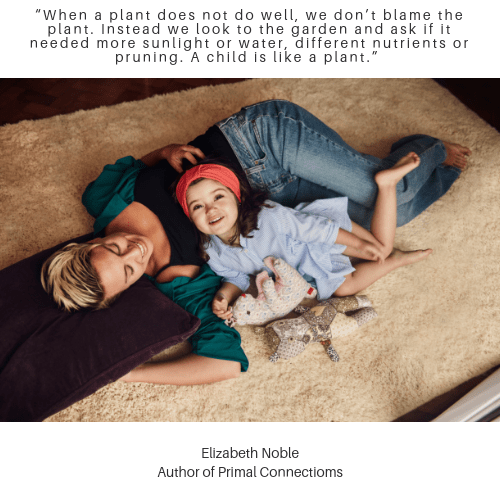
When are we going to fully realize the power of mother? Although we make so much about pregnancy and babies and women becoming mothers, I believe we have yet to admit to ourselves the power of mothering. When we talk about women’s power being fully acknowledged in the world, when we examine how the fear of the power of women is still holding us back in the workforce and in politics, might it be that the roots of that problem can be found in the fact that most are afraid to acknowledge the power of women have as mothers? Are we still blind in many respects to the absolute influence they have on the very core of who we are as human beings?  Until we acknowledge the power of our mothers, how can we hope to set women free to be powerful in other areas of life? What is the reason women haven’t yet been able to break through the discrimination? I think it’s because we truly have yet to really look at how our mothers have affected our lives and how this relationship affects the whole world.

For one thing it fascinates me that we become adults and we either joke about how much our mothers have “screwed us up” or perhaps we find ourselves feeling so indebted to them, or a little of both. But here’s what I believe. I don’t believe that either of these perceptions are any indication of the magnitude of their power and I’ll tell you why.

Let’s first take the perception “she really screwed me up”. It’s been my experience helping people to heal that those who have no trouble admitting this to themselves, (perhaps they have even moved away far from their mothers because they acknowledge her toxicity) for the most part, these people have yet to fully feel the pain and anger that would be required to feel, to fully set them free from the consequences of her shortcomings. The reason I say this, is because if they had felt it, they would not still be making the statement that they “screwed up their life”. Once we feel the magnitude of the pain our mother can cause us, we no longer can describe it in such a terse and flippant manner. Admitting this travesty, in the context of a fully present being, would require a tone that would be full of the experience of having felt and worked through the pain that this unfortunate history had caused.

One the other hand, those who are proclaiming the profound positive effects of their mothers, are not always, but often, not believable in their declaration of gratitude because when our mothers have in fact done the job of loving us well, the proclamation of this fact comes with a somber delivery, that in its music, contains the notes of the truth of her fallibility, making it a much more balanced and believable statement based in truth and not infantile fantasy.

When I myself was struggling with the layers of truly feeling and knowing my experience of my mother, my journey went through many phases. There was first the phase of not knowing at all the reality of her strengths and weakness. I’ll call this the “ignorance is bliss” phase. Then I began to realize the truth of her inability to love me the way I needed to be loved because she had yet to face the emotions that would make her aware of her painful need for her mother. The details of intellectual realizations that followed, did nothing to free me of the uncomfortable dynamic that ensued as I went from teenager, to young adult to full adulthood. What finally helped me heal the places where she neglected or controlled me, was in the full experiencing of my pain, need, anger and sadness. That was a long journey. Now I can see the truth because I felt the truth and I can finally be ok with her, because I am finally ok from having felt the truth. It’s like I felt the truth for both of us, and now I can love her as she is and let go of the child in me that either never really understood or knew her, or that wanted so much more.

When mother love is healthy and organic, it’s a given, and as given, it is not experienced as a bonus and shouldn’t be experienced as such. Don’t get me wrong, I am not saying that acknowledging a mother who did her job well is a negative thing. I am saying that most of the time when I hear this with tones of bravado or and especially when it comes with tears, it’s usually a sign that there is some internal conflict built around  that appreciation. When we acknowledge a mother’s love, it is not accompanied by the emotion of sadness as it pertains to some kind of sacrifice. That is a trap, it is not love, and it breeds codependency. Healthy maternal love gives power, leaving us without a beholden feeling to mother, only with power of self. As we come into this power, hers and ours, we can let women fill out all their power in the world and we will all be the better for having done so.


Emotional Survival

img_4975

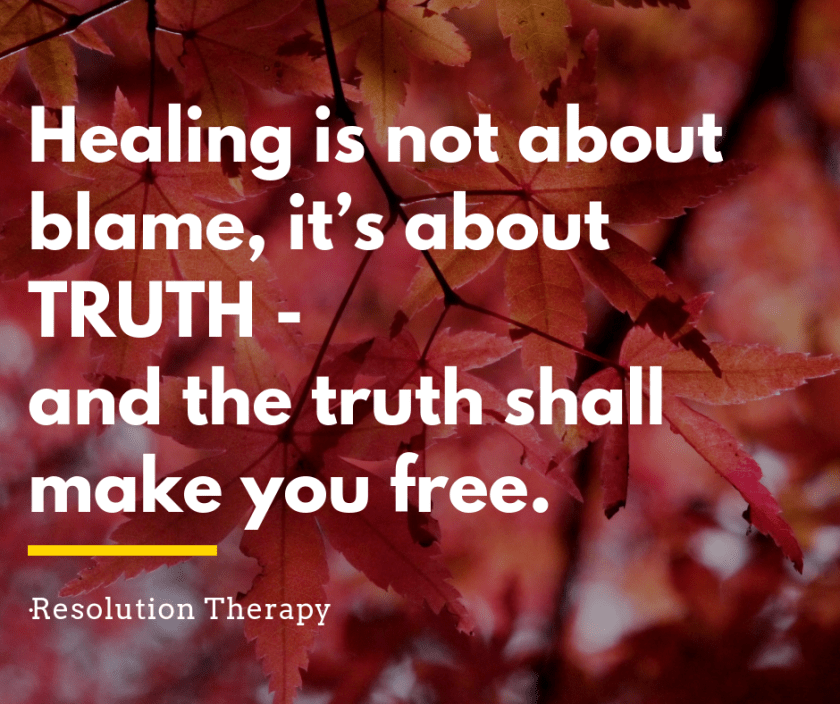
Saying our parents “did the best they could” in no way absolves us of having to do the emotional work in the areas where they fell short. In order to keep evolving as a species, we must look to our past so that we can move forward and become better people. It is only by working on what it means to be fully human, that we can move into more spiritual awakening. We must stop protecting our parents and ancestors, we must hold them accountable for their and our shortcomings. It’s not about blame, it’s about truth.  Psychologically, Emotionally and Spiritually, the truth really does set us free.

What would the world look like if we had the sensitivity required to pay attention to our children’s emotional injuries? What kind of a world would we be helping to create, if we could be as proficient at attending to our children’s emotional needs as we are to their physical needs? The dream of restoring full sensitivity to our children, can only come to be, if we are willing to look at and heal our own emotional wounds. If we truly want to make the world a more caring place, we need to become more sensitive to the emotional needs of our children, and in order to do that, we need to find out how to heal our emotional injuries. We need to go back and confront the places in our past where our emotional needs were neither acknowledged not attended to. We need to move beyond the emotional limitations of our parents.

Our emotional and physical lives are forever intertwined. When a child falls, the pain is both emotional and physical, and both require equal attention. We know from studies that serious physical injuries cause, psychological distress, but we are only beginning to understand how our psychological distress jeopardizes our physical health. We all suffer from emotional injuries that our parents inflicted upon us. They had no choice. If they endured any emotional injuries and hadn’t ever had the opportunity to work through them, then the emotional injury inevitably got passed down to us.

Love is the emotion that creates connection, and as far as our babies and children are concerned, all they long for emotionally and physically, is that loving connection to us. It’s important to realize that the emotions, we as adults would prefer not to feel; anger, fear, sadness and need, are the only tools our babies and children have for letting us know when connection is at risk.

When we are responding to our needs. When we are willing to receive comfort, when we are living well, it is a result of having known comfort and having had our needs met. From the place of security, that these emotions offer us, we are able to care for others. If we truly know these emotions, and have access to them, then our mere presence can at times provide relief and love to others. However, wherever we are lacking in our capacity to feel the emotions of comfort and love, we are challenged to care for ourselves or anyone else. It is only by reawakening our deeply buried, emotional needs for our parents’ comfort and love, a need most of us at some level were forced to forget, that we can find compassion for ourselves and others. When we honor that vulnerability which unites us in our humanity we can finally know peace.

Feelings vs Emotions

There is a difference between a ‘feeling’ and an ‘emotion, and distinguishing one from the other is an important factor when it comes to our health. It’s true that we experience both emotions and feelings in our bodies. However, feelings cause tension that blocks the natural processes we rely on to understand and resolve our problems, whereas emotions, enable our bodily systems to do their job of keeping our bodies and minds healthy. Panic is not fear, frustration is not anger, pity is not sadness and fawning is not love. Only pure emotions can help us heal. Our emotions operate through a perfectly beautiful system based in and orchestrated by nature. One could indeed consider our emotional processing to ba a natural science.

We are primarily, emotional beings, our thinking is a byproduct of our feeling bodies. The emotions comes first, then the thoughts. Research by Antonio Damasio indicates that Descartes was mistaken when he claimed , “I think therefore I am.” Damasio has decreed from his research, that it would have been far more accurate had Descartes concluded, “I feel therefore I am”. Damasio’s work has proven that our emotions provide our brains with the information we use to understand ourselves and everything around us.

Damasio discovered through his research, that once the creative/emotional part of brain has been damaged, it hinders our ability to make decisions. The more damage, the more jeopardy to our decision making process. Damasio provides us with proof that our emotions are an integral part of the choices we make in our lives. Decision making  that is based upon, our emotional self, is information based on our reality and is the process by which we develop into our unique selves. Personally, it has given me great joy to think that the derogatory accusation, “you’re so emotional” may soon be understood as a complement.

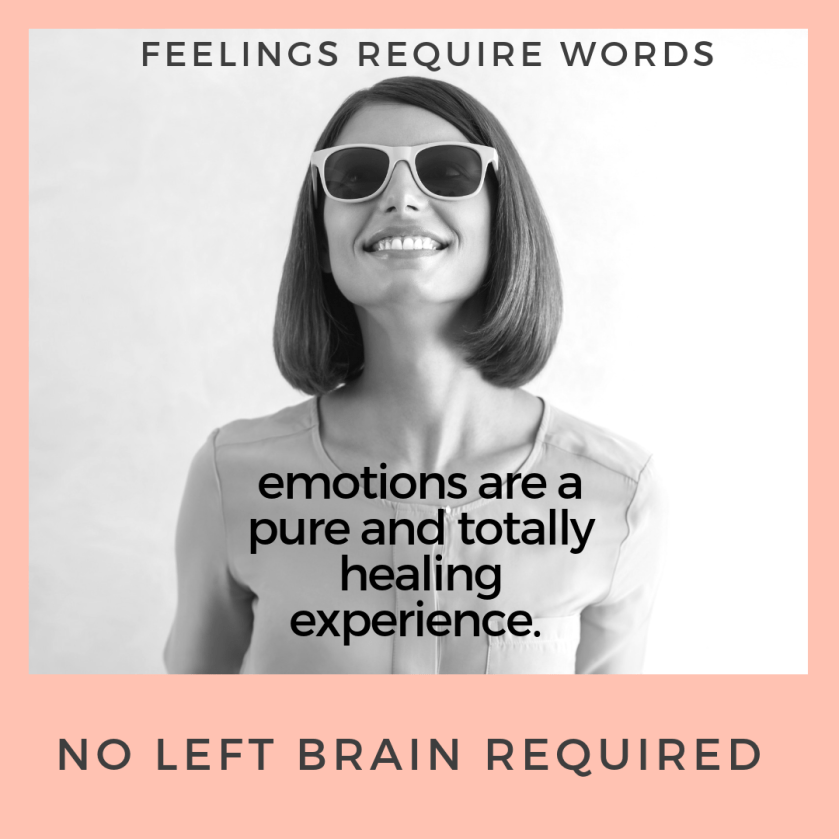
Damasio distinguishes a feeling from an emotion in his book “Self Comes To Mind”, when he notes, “…feelings of emotion are primarily perceptions of our body state during a state of emotion.” In other words, ‘feelings’ are perceived, whereas ‘emotions’ are experienced. Feelings are perceptions of what is happening in situations that have evoked emotion. If we are perceiving, we are using our logical brains to draw conclusions in order to decide how we feel. Damasio cites pertinent brain research, that proves the existence of a reactionary, time lapse, as we go from experiencing an emotion to having a feeling. He writes, “The time frame….from the moment stimuli were processed, (emotion) to the moment the subjects first reported their perceptions (feeling), was about half a second.” Quite a substantial amount of time when one considers that a brain neuron can fire in about five milliseconds. Neurons are the brain cells that transmit information. Emotions happen in our bodies within the exact instant that a situation is occurring. Feelings lead to, and require words. The moment we are using perceptions to relay information about the emotional experience, it no longer qualifies as an emotion. Feelings require the use of our intellectual brain. Emotions preclude explanation. If we take into account everything Damasio is saying, we can conclude that, once we explain an emotion, it no longer qualifies as an emotion.

Our Emotional Brain

img_4946

Coming out of an emotionally dysfunctional family took its toll on me.

I struggled for years to find something meaningful to do with my life. And my relationships? Well they never seemed to turn out the way I had hoped. I went to therapy and had an excellent therapist for 12 years. I recounted, and cried about, hurtful past events and things did improve, but I never really felt done with the past, and my present was proof positive that I wasn’t.

A few years ago, I came across the work of a woman named Julie Motz, and it provided the missing link for me. Julie is a healer and author of the book Hands of Life and her work deals with emotional-energy. The philosophy of emotional-energy healing is based on the principle that emotions are the energies that run through our bodies and keep us healthy.

Julie believes that healing emotional wounds is incumbent upon one finding and removing the emotional blockages within oneself.

What was wonderful about the healing was that it allowed me to really resolve my past and be done with it once and for all. As Deepak Chopra says, “Once you have healed, there’s nothing to forgive.”

So how do emotions become blocked?

A child is running in the playground, falls, and severely scraps a knee; it is frightening and painful. If no one empathizes and validates the fear and sadness; no one offers the hug and the soothing words; or if, worse yet, the child is in any way berated or chastised for having fallen; then the fear, anger and sadness are buried. In fact, it’s commonplace for a child who has had an upsetting experience at school, to immediately play out the emotions once within the safer, more nurturing environment of home. I’m a mother, I know.

The consequence of unexpressed, invalidated emotions is that they cause all kinds of problems in the present. I have been on a healing journey long enough to know that any interpersonal, irresolvable conflict, occurring in my present, is a repeat of an unresolved, unprocessed trauma from my past. The problem with suppressed emotions is that they seriously limit our ability to be fully present.

The psychologist Frank Hannah, MS, gives weight to the theory when he writes, ”The feeling brain stores the memories, collected knowledge and beliefs acquired over a lifetime, holding them in readiness to influence, if not determine all of our thoughts, behaviors, feelings and emotions.”

Have you ever found yourself thinking about the past and saying to yourself, “Why did I overreact?” or “How could I not have seen how distrustful that person was?”

We seem to be declaring that our emotional brains over-rode our logical brains. A PBS special entitled “The Secret Life Of The Brain” is a wonderful source for anyone interested in learning more about the critical interplay between reason and emotion.

The research indicates that the thinking brain and the emotional brain are always working together and perhaps when important emotions get blocked in the past, it jeopardizes its ability to do so well. The emotional brain allows us to have the visceral experiences necessary for the thinking brain to fully comprehend the truth of our experiences.

When my emotions are overwhelming and my arguments turn messy and frustrating, it is an indication to me that some unresolved, hurtful situation from my past has been stirred up and that I am not fully in the present. The circumstances and people are new, but the feelings they stir up are old. It’s an interesting phenomenon.

Somehow, the old, unresolved conflict shows up again in my life as an opportunity to process and heal. Perhaps the theory of reoccurring issues is a well-known one in the world of psychotherapy, but it was not a technique being used by my psychotherapist.

I recently saw two people bump into each other. One person knocked into the other as they passed on the sidewalk. The person who was not paying attention immediately started to apologize profusely; but it was obvious the moment their bodies made contact, that the person who had been knocked into was transported back to another place and time. His face and body energy were in no way related to the actual moment because the bump was not that harsh but his face was full of fury and frustration. Poor perceptions, unresolved anger and pain are the cause of many, many misunderstandings and can be so potentially damaging.

So, when a messy conflict arises in the present what do I do to rectify?

First, I get quiet and ask myself, “When in the past did I feel similarly?”

Then I go back and replay that scene; only this time, I get to express everything I felt, no holes barred. The whole healing process gets done through visualization. No one gets hurt, and I get healed.

Once the suppressed fear, anger, and sadness have been expressed, it is very important for me to follow with comfort and relief. Just like the child who fell and needs comfort, I visualize one or more people who I know can offer empathy and comfort. I allow myself to be comforted, I immerse myself in that comfort, and I actually can sense the relief in my body. Imagining allows the body to feel whatever the mind creates.

The muscles, bones, cells and systems are all affected as if it all were actually happening. In fact there are studies showing that when you express your old unresolved emotions, your immune system gets an immediate boost. As a result of using this method, I am able to feel the healing in my body and somehow my life is flowing more and more smoothly.

In a recent radio interview, as a way of explaining the oneness of the mind/body, Ms. Langer spoke of a study done with actors. An actor playing a character, who is completely and utterly immersed in the role, becomes not only akin to the character in outward appearance but also altered on a physiological level (i.e., blood pressure, heart rate). The actor is not ‘watching himself’ be the character, but rather has merged completely with the role—the visualization technique works in the same, exact way.

The mind believes, and the body feels and responds.

Discovering where the emotional conflicts are in the past can be the key to resolving the present. The word resolve has its roots in the Latin verb resolvere, meaning to loosen. I find the definition particularly accurate when applied to healing the body. The repressed emotions make us tight and stressed, and by resolving the past, we literally loosen ourselves. It’s a shame to let stressful times from the past contaminate our present opportunities for connection.

Once we process blocked emotions from the past, the emotional and the thinking brain can once again be partners.

When we restore our ability to accurately perceive all situations, then all of our emotions are available to us, our breath flows freely and, we are once again returned to our senses. From this place our relationships can flourish and our life energy can flow.


I Feel Therefore I Am

Every human being suffers from one inescapable conflict: the struggle between the feeling body and the thinking brain. Once we resolve this conflict we can resolve everything. Over the course of a lifetime, we are destined to experience some suffering. There are hundreds of therapies designed to help us, but in order for any therapy to be effective it must do one thing above all else. It must end the discord between our feeling bodies and our thinking minds.

In our formative years, the way our mind/body relationship gets formed, determines the quality of the most important relationship we will ever have, the relationship to our self. As children, each time our emotions were not validated, our minds were forced to draw conclusions from information other than what our bodies felt. The result was an unresolved, constant conflict between what our logical minds told us and what our bodies actually felt. As we move through our lives, the quality of the relationship we are having to ourselves, affects our mental and physical health, our relationships with others, our place in our community, and our experience of the world at large.

Resolution Therapy” explains how and why our minds and bodies end up at odds with one another. It examines the crucial part our emotions play in resolving life’s conflicts. Our emotions are not a luxury, they are the means through which our minds and our bodies remain in harmony and in health. Any situation in which we are are unable to access our emotions creates an internal conflict that keep us from understanding ourselves and our lives.

Resolution Therapy” is a  self-healing technique that creates peace in our lives by restoring harmony between our minds and our bodies. It does this by teaching us how to feel pure emotion. Once we feel and understand the role that our emotions play in our mental and physical health, we will not only feel better, we will regain access to the very tools that nature gave us to cope with all of life’s struggles.

Emotion-ology

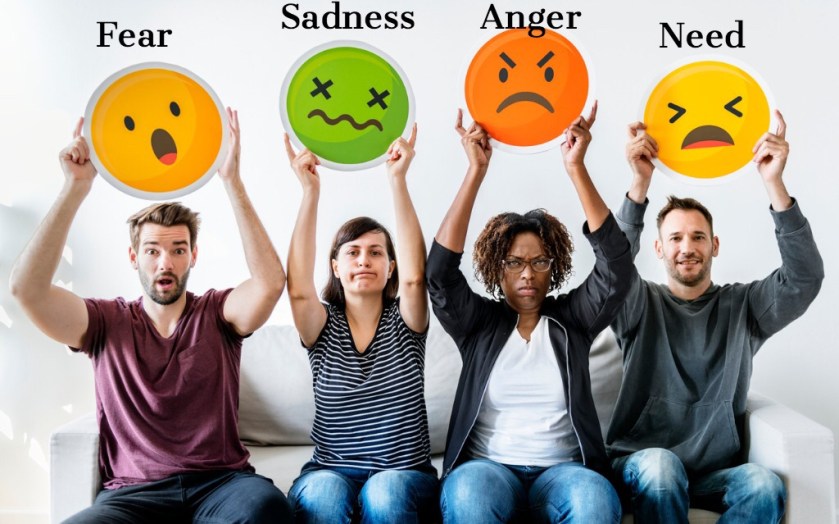
Above are the four emotions we would all rather not feel. Unfortunately for us these emotions are necessary to our species. They help us to survive and evolve. All of these less than pleasant emotions, have an interconnectivity to them. Once we are experiencing one of them, they lead us into the others in a beautiful sequencing designed to keep us physically safe and psychologically sound.

One example that depicts the beautiful sequencing of our emotions goes as follows: When we walk into a party, where we don’t know anyone, the first thing we are doing is using our nervous system to determine whether we feel afraid (fear) or excited about the encounter. If we sense aggression, our system then must decide whether or not we need to exert our boundaries and to what degree (anger). Trapped in this unpleasant situation we feel disappointed (sad) and upon leaving the situation, the missed opportunity for making connection to another human leaves us with a feeling of emptiness (need).

If we want to live our most healthy and fulfilling life, we must become aware of the places in our life where we don’t have access to these primitive, raw yet essential emotions. We must restore accessibility to all of our survival emotions so that we can be safe enough to grow fully into ourselves.

Our emotions keep us aware and they increase our chances of attaining a higher consciousness. Our emotions make us fully human. We must graduate from the school of being a fully feeling human, so that we can continue evolving and becoming more aware of our spiritual essence.

Our Emotional Nature

Dr. Frank Wilczek, the physicist and MIT professor, has written about the beauty of science as it relates to life. He reminds us that what we presently refer to as ‘science’, was at first called ‘natural philosophy’. There is a system to how our emotions function that is an example of natural philosophy at its best! Physics is a natural science that concerns itself with energy. Everything in the universe is comprised of energy, including us, and our emotions are an instrumental part of the energy that keeps our bodies functioning. The definition of energy in applied physics is, “that which does work”. Our emotions are energies that do work in our bodies, they keep our mental and physiological systems running well. It is a fact that a good cry triggers a chemical reaction within the body that is associated with stress reduction and that less stress means a stronger immune system. There are more obvious correlations, such as the emotion of love in the form of touch and care that keeps babies alive and growing. It’s been proven that food and shelter alone is not what keep babies alive but the emotion of love demonstrated in the way we care for them. It is the emotion  of love that enables babies to develop into healthy, resilient children.

We now have scientific research in the field of neuroscience that validates the effectiveness of therapies that help us to feel our emotions. We now know that what we feel in our bodies greatly affects our minds.

In the following pages, I will explain how our emotions work to heal us by putting our bodies and mind at peace. I will provide clear examples from my life and my work, that give evidence to my belief; that all of our problems come from conflicts that exist between the mind and the body. Nothing that happens in life can destroy us. It is not being able to feel what happened to us, that threatens to destroy our mental and physical health. Conflicts between what the body feels and what the mind thinks, negatively affect our health and our relationships. By denying our emotions, we stay stuck in conflict and false, inner dialogues that prevent us from knowing ourselves and living out our true destiny. Our emotions are the only means we have for knowing our truth. As long as our emotions are not operating freely, we are remaining separate from our truth, and separate from our own true selves. Until our mind/body are in harmony, we will find ourselves in conflicts that need to be resolved. Our internal conflicts will continue to create problems not only in our bodies and our minds, but also in our relationships, our communities and our world. Over the years, I have often thought of the biblical quote, “..and you shall know the truth and the truth shall make you free”.  Nature intended us to keep feeling and processing our emotions so that we could know our truth and live and love better. We need to understand the meaning and purpose of our emotions, so that we can become less afraid of experiencing them. Living in our truth, ends all need for conflict. With a full awareness of our truth, our journey through life becomes unhindered by past unresolved problems. We become more at peace and one with nature. The worlds of science, health and spirituality are merging more and more. There are so many paths, but there is only one truth. Absence of truth will always interfere with science and nature. The truth aligns and harmonizes everything and everyone, and puts us in sync with the universe.

Good therapy should make it possible to understand why things go wrong in our lives and give us tools to set things right. Our emotions coupled with our imaginations are all the tools we will ever need. Nature gave us a way to not only survive, but to resolve everything, so that we might thrive and evolve individually and as a species.

Why is love so complicated?

Why is love so complicated?

And can explaining why, be done in an uncomplicated way?

I’m going to try. We all need love. We all want love. We all want to have some, one person, or perhaps it’s a pet, to love and to love us. But even if we succeed at finding someone to love, we can still find ourselves struggling with that relationship, or if not that one, then our relationships with the other people in our world or within the world in general. And when we expand the circle out into the country or the world, we become even more fractured in our ability to love and be loved; country, party, race, religion. So why does it have to be so difficult to all love one another? Yes. That’s where all the above facts about love get blown to bits! We all know love is good, but we all either experience the struggle first hand, or see the struggle in our communities or in the worlds of politics and religion.

So perhaps it’s all based on how much we really love ourselves. You know, that old bible quote, “love others as you love yourself”? Was that really meant as advice or a warning? Perhaps the true intention of that famous quote is that we can only love another as much as we love ourselves.

Could the answer to why love is so complicated be in how we compartmentalize love? For example, why should the love we have for our child, be any different from how we love our spouse or our partner, or any other child for that matter? Why do we afford the child a patience and understanding that can completely evade us when we are dealing with let’s say our husband or Donald Trump? The answer is because we expect more from them. We justify it by telling ourselves, “they should know better”, but apparently they don’t. If they did, wouldn’t they do better? And for that matter, if our children don’t behave well, why should we assume, that they should know better? If they knew better, why would they choose not to do better? It makes no sense. If a child is choosing to misbehave, if it’s really a conscious choice, then something is promoting that choice and that’s the thing that needs to be addressed. Addressed with a desire to understand where they went wrong and made a poor or dangerous choice. We need to search to understand, because understanding is love, and we can’t provide that loving understanding, unless we ourselves know it.

So here’s why love gets so complicated.

Love is connection, and as far as our babies and children are concerned, all they ever long for, emotionally and physically, is to have a loving connection to us. All the unpleasant emotions they may express; fear, anger, sadness, those emotions are all they have to let us know that their connection to us feels threatened. It’s important to recognize that all of those other emotions that we would rather avoid; anger, fear, sadness, need. All those other emotions, when suppressed and unprocessed, are what cause us to behave badly, those emotions are the only tools we have for letting others know when love and connection are at risk, without them we become erratic or frozen in distress. Adults doing badly, are merely babes and children, struggling to use their emotional tools, people who are desperate to restore the hope of ever being understood and ever finding connection. Underneath all the recent political, fear mongering, and all the frustration about the far right or the far left, underneath all this, are just a bunch of children looking to be understood and loved. For all of you Mel Brooks fans, think of the scene in the movie Young Frankenstein, when the monster (Peter Boyle) is raging out of control and Dr. Frankenstein (Gene Wilder) goes to him and asks him to explain what’s really wrong, how he feels unloved and alienated. And what happens? The monster ends up weeping in sadness until Frankenstein hugs and rocks him back to feeling love and connection. That moment in the movie, like most great comedy, is wrought with some bitter truth. Without understanding and connection we rage and struggle. The less understanding and connection, the more upset we become, and then the more potential there is for us to cause emotional or physical harm to ourselves or others.

So that’s why love is so darn complicated. It’s because the answer to what goes wrong on a personal or global level, lies in our very beginnings, a place that for the most part, the world is refusing to look towards for the answers. It’s clear to me that in order to make love less complicated, we need to look back to all the places in our past where love and connection were threatened. We need to make right any place where we tried to express our fear and our anger, because no one could understand that what we were actually looking for, was love.

The good news is, if we can restore our ability to understand each other, if we can keep using our emotional tools, then we can ultimately get the love we all need, and then little by little, we can restore love back to its original, profound simplicity.

We all just want to be loved.

Reactions/Responses

Reactions are defensive feelings born out of a denial of our vulnerable self; they promote isolation and hinder community. We are all incredibly fragile; that will never change. When we are stuck in our defenses, trapped in our mind’s feelings, we are denying the vulnerability we were forced to deny somewhere in our past. Denial of our fragileness only serves to harden us and make the world a less safe place

Reactions are always indications of existing internal conflicts. When we find ourselves obsessing in our heads about some occurrence in our day, what is really happening is that our body and our mind are in the throes of an old debate, and neither wants to yield to the other. Our body is longing to feel pure emotion. The real source of our mind’s distress is never simply stemming from the current event, it is always coming from the past. If the conflict had been dealt with well, there would be no anxiety or distress inside our minds. Our brains would not obsess if we were in the present. If our emotions were operational, we would feel completely in control. Anxiousness, and the inability to think clearly are always an indication of an old, inner conflict trying its best to find resolution. You can look at it this way. The worse the reaction, the more traumatic the past situation. Because we were unable to reconcile the fear and anger in the past, we are thrown back by the present moment’s incitement of our past distress.

One example of a reactive, false narrative, one that we can all identify with, is the common expletive, “I’m over it!”. Who among us, hasn’t claimed that we were over something or someone, because our logical mind so desperately wanted it to be so. We tell ourselves we can use our minds to will ourselves into some preferable state of being. It never works. The thought of “I should be over this person or event” creates the feeling of contempt. The conflict is still alive. The real emotion is sadness, and the inability to process it, is coming from an important, past event in which sadness was neither fully felt nor processed. Past reactions are recorded within our nervous system and become accepted ways of dealing with pain and hurt. Yes, time helps us to bury the conflictual feelings, but the need for resolution will remain within us, and both the body and the mind will suffer. Mention the event a few years later, and there will be a twinge or a pang in the body, reminding us that we never really processed and resolved that situation. False beliefs or statements always cause a tense reaction in our bodies

When we are responding to a situation, we are experiencing emotion, when we are not, we are in our defensive feelings. We are experiencing emotions most of the time, but when we aren’t, it’s a problem. When our encounters with others send us into a state of confusion and upset, we are in a past moment in which we were also in distress. When this occurs we are no longer in an emotional state, we are in a panic, a kind of shock. We have all had experiences where we couldn’t articulate what we were feeling and it feels awful. We walk away with our minds racing and we continue to be tormented about what happened, what we said or didn’t say. Faced with any encounter, we will either be in a position to respond or react. When our bodies are able to stay calm, we usually find ourselves perfectly able to respond to the situation, coming through it with our peace in tact. However, when we have been rattled we can find ourselves, reacting either with hostility and aggression, or shutting down completely. When we are left with no other recourse than to react, it is because the situation we found ourselves in, triggered an unresolved moment from the past. A past occurrence in which we also were not able to access and process our emotions. One of the reasons that the emotion anger, an emotion so necessary to the maintenance of our self-esteem is given such negative press, is because reactive, aggressive behaviors that we witness either on the street or on the movie screen, or in our own households, are labeled “anger” when in fact they are not anger at all but destructive, aggressive reactions. As Damasio and Dr. Van Der Kolk’s work reveal, we get triggered when we can’t access our emotions and we become either aggressive or despondent. The mind/body conflict gets triggered. Dr. Van Der Kolk refers to this state as being ,“emotionally hijacked”. When our brain shuts down in this way that causes us to lose control over what we say or do.

So what can we do in these situations? Well, first of all we can begin to become aware of the times in our life where we are actually in a reactive state. Once we are aware that we are unable to be calm and respond well, we may be able to walk away from the situation so as not to cause any verbal or physical harm to anyone. If we are finding ourselves turning inward and folding under the pressure, we can try to remove ourselves from the situation or be aware that we are no longer present in the moment. What we need to do once we can identify these places in our day, is to later walk back through them in our minds and allow ourselves to be fully present, in this way we can start to resolve the past. We look to our bodies for clues to uncover what it knows. Where in the past did I feel similarly to this moment? When we have the freedom to recreate the moment without the pressure of another person to deal with, we can discover where in our bodies we are reacting to the situation. Often we will have tension in our throat, or chest, or our shoulders will start to ache. Whatever reaction the body has, is a clue to its memory. Sometimes the focus on the body is enough to bring the memory to our conscious mind. If nothing comes up we can begin to ask questions. One way I have affective to tap into the body’s knowledge, is to give that particular part of the body a voice. If my chest could speak out in this moment what would it say? Or how old is this place in my body? Once we locate the place from the past, the next step is to stay there and walk ourselves through it, only this time with the presence to feel our emotions fully. We can then find a way to deal with the people from the past, work through our fear and anger, receive comfort and connection, reconcile the moment and resolve the inner conflict. Reconciliation of the past always allows us to replace shame and guilt with self-compassion, we get to reinstate our worthiness. Our imaginations play a vital role in healing. Our imaginations make it possible for us to experience and relive the old events in our minds. When our mind creates a scenario, our bodies respond as though it were actually happening making it possible to go back in time and process our emotions. Nature intended us to use the brain’s ability to imagine so that we could help ourselves feel better. It seems nature knew that we needed something to enable us to experience the healing emotions of comfort and love in our own minds so that we could experience those emotions even if our caregivers let us down. I have taught my students how to employ the gift of their imaginations to alleviate all of their mind/body conflicts.