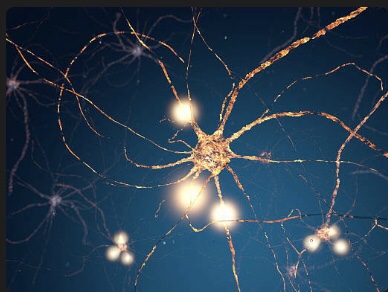
Holding Back The Tears

Who among us hasn’t had that moment? You know, the one where you fight back the tears? Or how about the one where your heart is pounding and you feel furious, but you push it down because you fear what you might say or do? It’s important that we have the ability to regain control of ourselves in moments like these, but I’ve often thought about what these moments might be trying to tell me? For me, these moments have provided some important information. It’s true, there are times in which it would be completely inappropriate to just let our feelings flow, but why at certain times do we find ourselves consumed by such strong emotion? So consumed that our rational, decision making brain is forced to take a back seat. In these moments, the emotions that we feel in our bodies, are trying their best to override our thinking brains. It seems to me that our bodies are wanting us to know some truth, perhaps a truth that is buried deep within us.

As human beings, we are all familiar with uncomfortable emotions. In fact, according to trauma specialists, like Dr. Bessel Van Der Kolk, author of the book, “The Body Keeps The Score”, our brains do their best to protect our bodies from feeling uncomfortable emotions. Although the intentions of our brains are all good, this protective mechanism causes a conflict between the feeling body and the rational mind; it creates a mind/body conflict. And here’s the catch-22! The only way of resolving this mind/body conflict, is to allow our bodies to experience the very emotions that our brains are trying to avoid. According to neuroscientists like Antonio Damasio, author of the book, “Self Comes To Mind”, our emotions are the body’s way of understanding our experiences. Our emotions supply our brain with the truth about our life, which means, feeling our emotions is vital to our peace of mind.

So I’ve asked myself, what if I didn’t just move on from these moments where I fought back my tears or my anger? What if I were to examine my reaction later, in private, in the safety of my own mind? I needed to ask myself some questions, like what was going on for me in that moment? Why did I find it necessary to squelch my emotions? Well, what I’ve discovered over the years, is that the reason the emotions in these moments are too intense, is because they are reminding my body of an unresolved time from my past; a time when my mind was forced to bury the very same uncomfortable emotions that my body was feeling in the present situation. I’ve discovered that whenever I am unable to calmly and clearly express my sadness or my anger, it’s because the present situation has triggered a messy, unresolved moment from my past. I have been able to learn so much about the truth of my history and I have been able to resolve and heal so much from taking the time to emotionally explore these situations.

In using the present to heal the past, I have discovered some commonalities. I have found that in the conflictual present there is always a sense of confusion. My logical mind always seems to be struggling to gain control of the situation, but failing to do so, because at the same time my body is experiencing the moment as a crisis. I also have discovered that the emotion I was having in the present, was always way more intense than the situation warranted because it was being exacerbated by the pain and anger of the past. I have also found that the degree of emotional intensity in the present conflict, was always based on how hurtful the past moment was, and how many years it had remained dormant within my body. When our logical brains are forced to deny our emotional truth, it doesn’t go away, our bodies will store the information, waiting for opportunities to resolve the past. It appears that nature’s law of attraction is at work, leading us into certain emotionally charged circumstances in order to supply us with the opportunity to reconcile and relieve our bodies of the conflict.

We are all destined to find ourselves in emotionally uncomfortable situations with others, and we can heal and grow from these moments. Through these uncomfortable moments, I have been able to reconcile many past events. I have learned that each time I reconcile a past moment, I am better able to handle my emotions in general. Each unwelcome opportunity, brings me closer to resolving my mind/body conflict and I actually feel more and more peaceful in myself. There are hundreds of therapies designed to help us resolve the conflicts in our lives, but my personal and professional experiences have led me to one conclusion: In order for any therapy to help us find more peace in our lives, it must do one thing above all else; it must end the conflict between our bodies and our minds, and the only way to end that conflict, is by allowing the body to feel its truth. The truth of human experience can only be understood through the brain’s processing of pure emotion. These “fighting back the tears” moments are our bodies way of desperately trying to feel its truth.

Our emotions are not a luxury, they are our only means for maintaining harmony between our minds and our bodies,  keeping both peaceful and healthy. An important factor when it comes to healing, is knowing the difference between a feeling and an emotion; feelings keep us stuck, while emotions have the power to heal us by resolving our internal conflicts, making us better at forming real connection with others. We experience many feelings that are mistaken for emotions: guilt, shame, frustration, despair, hate, contempt. With emotions, there are only a few to choose from; the ones we need to deal with most often are: fear, anger and sadness. I have found that all of my irreconcilable conflicts are a result of my inability to access and process pure emotion.

In conclusion, in these moments of confusion and overwhelming emotion, I do my best to stay calm and rational, even when my heart is pounding and I feel the tears coming on. I do my best to keep conscious of my breathing and get through it, knowing that I can find my peace later. I try to stay aware of everything I’m feeling without reacting to any of it. Later on, I am able to deal with everything from a place of true understanding. This self-examination always leads to more compassion for myself, as well as anyone else who may have been involved. I know that these “fighting back the tears or anger” moments are my bodies way of asking me to listen to what it knows, personal stories, that my mind has yet to acknowledge. I continue in this way to resolve my internal conflicts and find more peace in my life. Gandhi gave us these wise words, “you must be the change you wish to see in the world”. He knew full well that the peacefulness in our world, will always only be a clear reflection of the peace we hold within ourselves.

“I’m Not A Smart Man, But I Know What Love Is.”

This is my favorite line from the movie Forrest Gump. Love really doesn’t have anything to do with intelligence, at least not in the way we are conditioned to think of intelligence. Love is an experience. Love must be experienced to be known. We all, to a certain degree, have experienced love, without it, we would not be alive. However, the degree to which we can give the experience of love to another, is the degree to which we have received love for ourselves. Love cannot be intellectually learned, for that matter, none of the emotions that keep us mentally and physically healthy can be learned through our reasoning brain. Could this be the reason that such a simple and pure concept, as love, is SO very complicated and the source of SO much struggle? If it were as easy as teaching someone what love is, then we would likely all want a Phd in love and we would want it to be from a prestigious institution. Even the Dali Lama and the great sages couldn’t really impart upon their followers the ability to love. Their teachings may have been experienced by their followers as love, and therefore granted them the ability to know more love, but love can not be taught in the traditional way we teach a subject. Love is not something that can be taught and therefore is not something you can intellectually learn or even explain to anyone else in an effort to school them in love. One does not become capable of love through the act of reading about love. Love must be received in order to be known and it cannot be given if it hasn’t been both received and experienced.

In somatic therapy, we can go back and re-write the moments in our lives where love was not given and we can experience that love in spite of the limitations of our caregivers, friends and lovers. The body only needs to use the mind’s ability to imagine in order for us to experience, feel and know what love is. Please don’t confuse ‘pretending’ with the powerful somatic healing brought about by ‘imagining’. When we are pretending we are outside ourselves watching ourselves in a scene. When we are imagining, we are immersed in a way that our minds are one with the scene. We are only in the scene, not in the scene and observing it too. When we are imagining, our bodies are experiencing whatever we are imagining, as if it were real.

Once our bodies know love, we can have the courage to provide to others the 3 aspects of love: courage, strength and softness. It’s the only emotion that requires equal parts strength and softness, and the knowledge of when to use which one. Love has dimensions and layers, and the capacity for understanding goes far beyond the capabilities of our rational, knowing brain. Like all of our pure emotions, our rational brain has very little to do with it. Emotions are pure energy connected to the source of creation. When we connect to pure emotion, we are able to connect to our own self, to others, and to the source of life itself.

Why It’s Impossible To Just “Get Over It”

For twelve years talk therapy was a nice place to go once a week to air my feelings and get some sympathy and advice, but it definitely did not heal me. My personal relationships were still unsatisfying and often conflictual, my self-confidence was low, and physically I struggled with pain and chronic illness. Yearning for understanding, healing became my life’s passion. I spent years studying everything from yoga, to the latest mind/body neuroscience, and I finally figured out something very important; something that really helped me; we cannot attain mental and physical health unless there is peace between our minds and bodies. Let me explain. When things go wrong in our lives, our tendency is to try and move on as quickly as possible. We will, more often than not, lie to ourselves, claiming “we’re over it”. So if we’re over it, why is it that our bodies still feel so bad? Why the sinking feeling in our stomachs, the tightness in our throats, the heaviness in our chests?
The truth is that we will never “get over it” by simply talking about how we “feel”. If we’re going to get over it, we must have peace between what our bodies feel and what our minds tell us, and this can only be achieved if we are willing to feel real emotions.
My quest for health and happiness became most productive, when I discovered that the real progress was happening when I actually felt an emotion and received empathy. According to Wikipedia, “empathy has many different definitions that encompass a broad range of emotional states”, however, for the purposes of healing the empathy that brings resolution is “the experiencing of emotions that match another person’s emotions”. For me, our emotions are what connects us. Our stories are different, but our emotions are universal. As I continue to heal and help others to do so, I have noticed that there is never any real relief in talking about how we “feel”. We must have the courage to actually feel our emotions and recent discoveries by neuroscientists are validating what we, somatic therapists, have known for years. Our emotions are not a superfluous part of our existence, they are a vital means, through which we are able to navigate all of life’s challenges. The problem is everything we feel is not an emotion. When we talk about how we feel we are using our logical minds to explain. The neurobiologist, Antonio Damasio, distinguishes a feeling from an emotion in his book “Self Comes To Mind”, when he notes, “…feelings of emotion are primarily perceptions of our body state during a state of emotion.” In other words, ‘feelings’ are perceived, whereas ‘emotions’ are experienced. Feelings are perceptions of what is happening in situations that have evoked emotion. If we are perceiving, we are drawing conclusions and deciding how we are. Damasio cites pertinent brain research, that proves the existence of a reactionary, time lapse, as we go from experiencing an emotion to having a feeling. The time frame, …”from the moment stimuli were processed, (the emotion) to the moment the subjects first reported ‘feelings’, is about half a second.” Quite a substantial amount of time when one considers that a brain neuron can fire in about five milliseconds. Neurons are the brain cells that transmit information. Emotions happen in our bodies within the exact instant in which a situation is occurring. Feelings lead to, and require words, but emotions happen in the now. Feelings require the use of our intellectual brain. Emotions preclude explanation. If we take into account everything Damasio is saying, we can conclude that, once we explain an emotion, it no longer qualifies as an emotion. In simply moving on. our minds are telling us we’re fine, when our bodies are quite clearly are not buying it. If the mind wins, (and unfortunately, it almost always does), the body will bury the upsetting emotions, and in doing so, both the body and the mind will suffer.
Here are 2 basic ways in which our emotions keep our minds and bodies healthy:
1. Emotions keep our minds healthy because they supply our brains with the truthful information we need in order to make sense of our lives.
2. Emotions keep our bodies healthy because we feel them in our bodies, and when we can’t access them, our bodies become tense. Tension means stress, and stress causes illness.
Here is an example of how emotions become buried.
A child is running, he trips and hits the ground, fear is the first emotion that he feels from the loss of control over his physical safety. First, he is frightened, and then come the howling tears of anger at having been hurt. (If you’ve ever stubbed your toe and dropped a few “F” bombs, you know this moment well). If that child is attended to, held, hugged, and comforted, he will have the acknowledgement of the fear, anger and pain that was caused by this fall. Within minutes, those tears will turn into calm; the comfort offered, will make him feel cared for and loved, and the world will be right again.

His emotions will have been processed, the empathy offered will have confirmed what he felt, and most importantly, what his body felt and what his mind understood to have happened, will be in harmony with one another.

If the above scenario is absent of empathy; if the parent of caregiver says things like, “you’re fine, walk it off”, or if that adult feels that not attending to that child is the way to “toughen him up”, then that little body is left in hurt and need, and all is not right. There is no resolution in the absence of comfort and love and that child will be forced to bury and deny the fear and anger and the pain. The body will hold all of those emotions, unprocessed, in spite of what his mind tells him, and this internal conflict will cause a degree of distress in his body. Most of us live with a certain degree of stress caused by a body and mind in conflict, this kind of stress is imperceptible because we have grown accustomed to it. We know that there is such a thing as good stress, but stress that is born out of a body and mind conflict is not good stress and it is always taxing to the body.
We must find out where in the past we were forced to come to conclusions about ourselves and our life, without having drawn the information from our emotions. Once we process the emotions that were buried, we can calm our minds and set our world right. The body is a healing machine, filled with inherent, natural healing processes. It is the ways in which we are stuck, that hinder its ability to heal itself. Nature has given us the means and the tools to heal everything. Our emotions are powerful energies that have the power to undo the stress that hinder our body’s healing resources. It is only by experiencing our emotions and receiving empathy from others, that we can restore peace to our bodies and our minds.

Somatic Therapy

A successful therapeutic technique is one that can undo the negative affects of all of the unresolved situations. Unresolved, past moments become trapped within the body and cause upset to the mind. Somatic therapies allow the body relief by allowing is to use our imaginations to re-enact the past and coax the suppressed emotions to the surface. Doing so, most importantly, allows us to resolve the past by imaging and allowing ourselves to experience a scenario in which our caregivers could have been present enough to let us feel our emotions and then by imaging them offering the validation of our truth and the comfort and love we needed in order to be at peace with our bodies our minds and our lives. Our minds have the ability to relive and re-orchestrate the stressful moments in our history. Our imaginations are a gift that can set things right in a way that affects us neurologically. What the mind imagines, the body feels, and by experiencing someone who could have validated our pain, and provided the caring, comfort and love that we all deserved, we can experience the emotional relief that simultaneously creates the physical relief. Unresolved traumas in our childhood, whether dramatic or developmental, neurologically wire us and in doing so, determine the probability of future harmony or conflict. Without resolve, the remaining internal conflict between what the body knows to be the truth, and what the mind told itself had happened, will continue to attract situations which mirror the conflictual emotions that were left disturbing the nervous system.